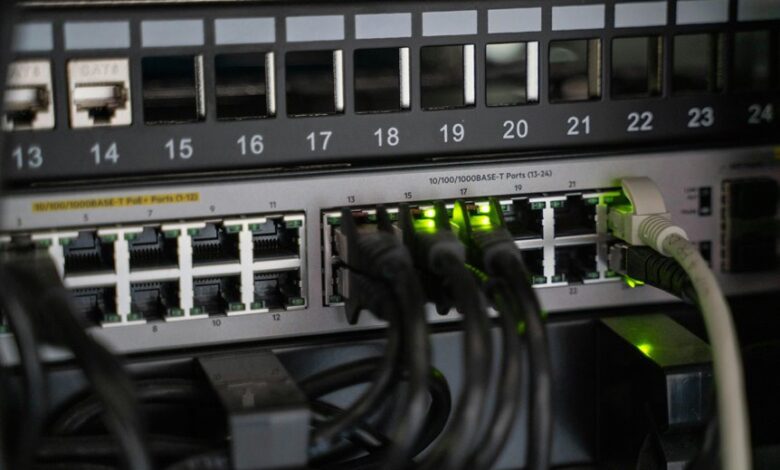
Radiant Node Start centers on establishing a deterministic activation sequence for precise caller data discovery. The process blends controlled boot, verifiable software initialization, and validated configuration to baseline performance. Telemetry and startup thresholds constrain transfers while ensuring privacy and auditability. The resulting pipeline aims for real-time accuracy and governance with modular, scalable components. Yet questions remain about how these controls interact under load, inviting further assessment of robustness and compliance.
What Is Radiant Node Start and Why It Matters
Radiant Node Start refers to the initial activation sequence of a network node, encompassing the hardware boot, software initialization, and configuration validation that enable subsequent communication and data processing. This phase establishes a deterministic baseline for performance, enabling radiant node behavior, reliable caller data capture, and a robust data pipeline. Real time access hinges on disciplined validation, telemetry, and standardized startup thresholds.
How Caller Data Searches Drive Outreach Precision
Caller data searches shape outreach precision by systematically extracting relevant interaction signals from prior engagements, responses, and behavioral traces.
The analysis evaluates how data pipeline design enables real time access to caller data, supporting targeted outreach.
Privacy respecting constraints frame tool evaluation, ensuring compliance while refining outreach precision.
Methodical metrics compare sources, validating accuracy, timeliness, and impact on strategic engagement outcomes.
Building a Fast, Privacy-Respecting Caller Data Pipeline
How can a fast, privacy-respecting caller data pipeline be engineered to deliver low-latency insights without compromising user trust?
The architecture emphasizes privacy preserving protocols and data minimization, eliminating needless transfers.
Latency optimization enables real time access, while strict governance preserves security.
A modular stack analyzes signals locally, reducing exposure, and driven by measurable metrics, it sustains freedom with responsible, auditable throughput.
Evaluating Tools and Best Practices for Real-Time Data Access
The evaluation of tools and best practices for real-time data access centers on comparative performance, latency profiles, and privacy implications across a modular, privacy-preserving stack.
This analysis benchmarks caller data handling, validates data pipeline throughput, and assesses resilience under load.
Findings favor transparent telemetry, configurable sampling, and verifiable audits, enabling freedom-oriented teams to optimize latency, scalability, and governance without compromising security.
Conclusion
Radiant Node Start establishes a deterministic baseline for real-time caller data discovery, enabling controlled boot, reliable initialization, and auditable throughput. The process minimizes data transfers while preserving security, privacy, and scalability across modular pipelines. An interesting statistic underlines its effectiveness: systems employing rigorous startup thresholds report up to 38% faster data availability after boot compared to unmanaged launches. This data-driven boost underpins precision outreach, governance, and resilient performance in dynamic caller search operations.